
6 October 2026
Marathon Fuelling….for mortals!
Nick discusses the best way to fuel your marathon with gels and drinks when you’re not an elite runner and have to be self sufficient
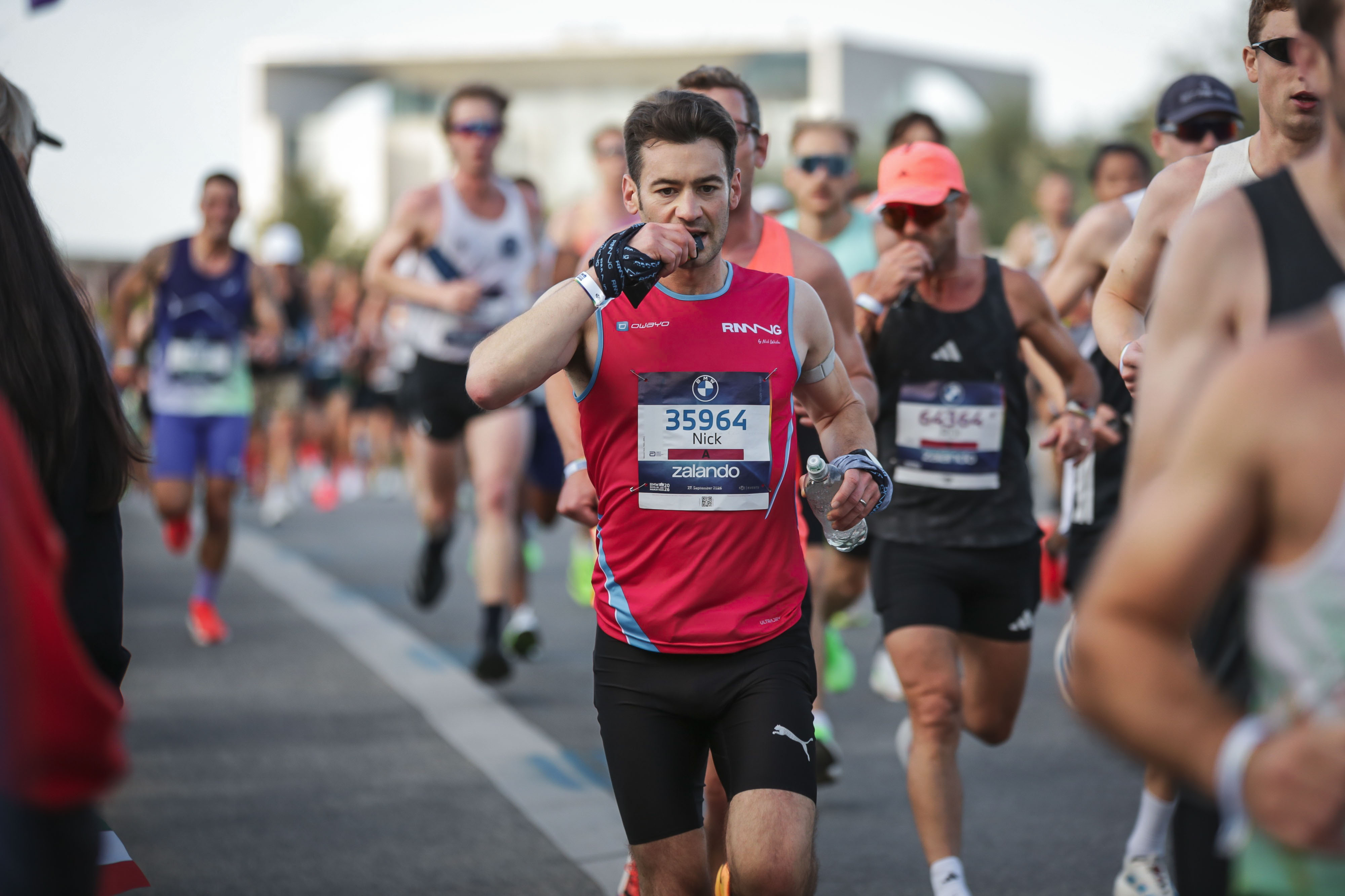
How to fuel a marathon when you’re not an elite athlete
In 2026, I think we can safely say that most runners understand the need to take on fuel in the form of some type of carbohydrate in order to run 26.2 miles.
Why do we need to eat during a marathon?
Without taking on energy you will, at some point hit the infamous ‘wall’ and be forced to slow down or even stop altogether. This is a multi factorial issue, but the breakdown can in large part be attributed to the depletion of your glycogen, your main fuel source for an intense effort, which is stored primarily in the muscles and liver. The average runner can’t store enough to keep muscles performing at their maximum for much past 40mins. Without taking on rapidly absorbed carbohydrates, your body will switch to different fuel sources such as your stored fat. A huge reserve of energy, but it only allows low intensity exercise.
Who needs to fuel?
It is of course possible to complete 26.2 miles without eating anything. As humans we are well adapted to travelling long distances burning fat and small amounts of glycogen. But if you have any desire to run a marathon with conviction, pushing yourself and running at heart rates and paces approaching your lactate threshold, then fuelling is critical!
How much fuel to take in?
The most common way for athletes to fuel when running at paces that are too fast to simultaneously chew food and breath (the struggle is real….) are to use gels and or carbohydrate drink mixes. These are highly portable, quick acting and easy to swallow with the minimum amount of chewing required. You don’t want to be missing too many breaths in order to eat! These gels are generally providing between 25g and 40g of rapidly absorbed carbohydrate each. Drink mixes can be made to specific concentrations depending on how much powder you mix with water, but 40g carb in 300ml fluid is probably a realistic maximum for most people to absorb.
What’s the best way to fuel? Gels or Drinks?
Much of this comes down to two things. What you’re used to and what you can actually access during the race. I’ve seen a lot of reports of huge carb intakes, for example Sam Griffiths (2:20 in Berlin) claimed 141g/hour using 37.5g drink mixes every 5km!!! But he was running as an elite athlete, and at major marathons the elite athletes have access to their own bottles and gels at regular points along the course. Us ‘mere mortals’ don’t have this luxury. We rely on what we can carry, what’s provided on course or the high risk tactic of picking up bottles from family members at pre arranged meeting points (assuming you can spot them in the crowds!).
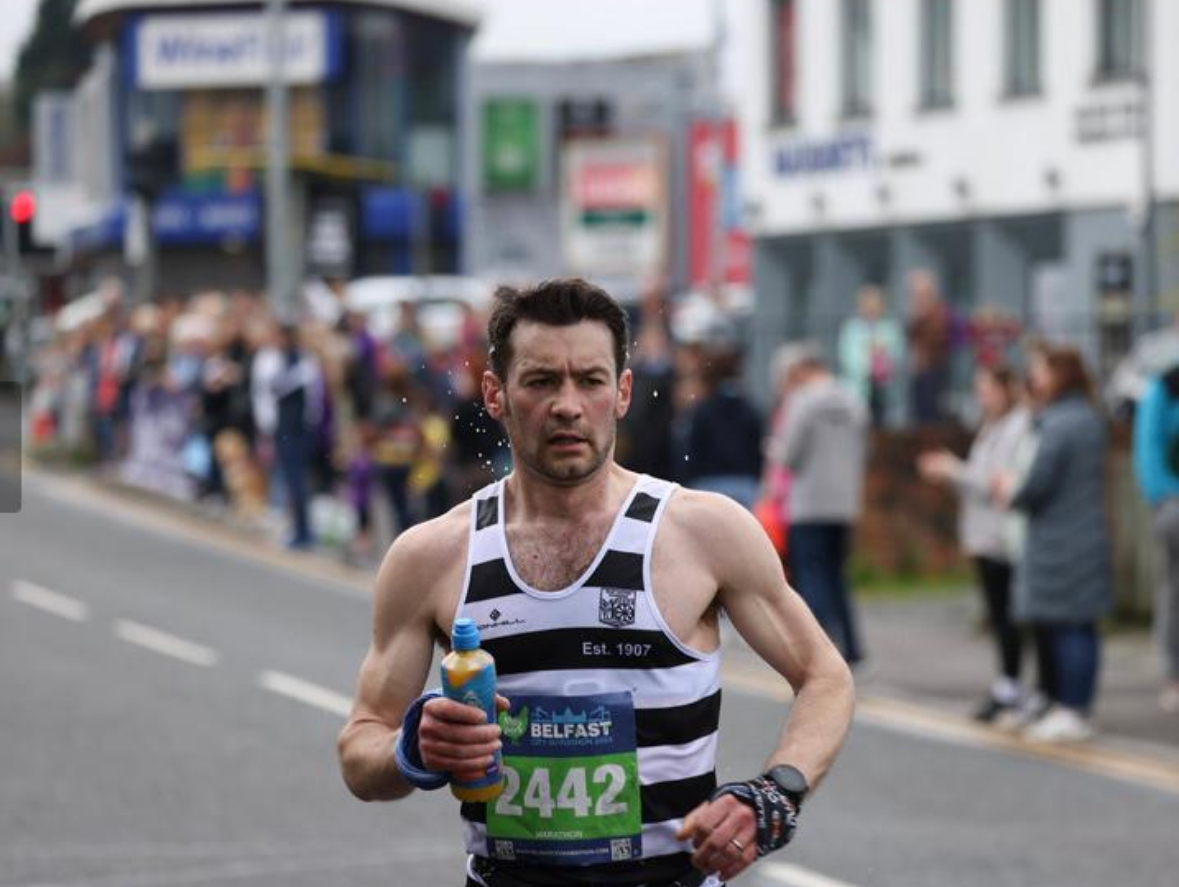
Carrying sachets of powder and mixing them en route is simply not practical. As a faster runner, not wanting to carry a hydration pack, two bottles is probably the realistic maximum you can start with. Personally I prefer to carry pure water with me and rely on gels alone.
How I managed my fuelling and hydration in Berlin Marathon
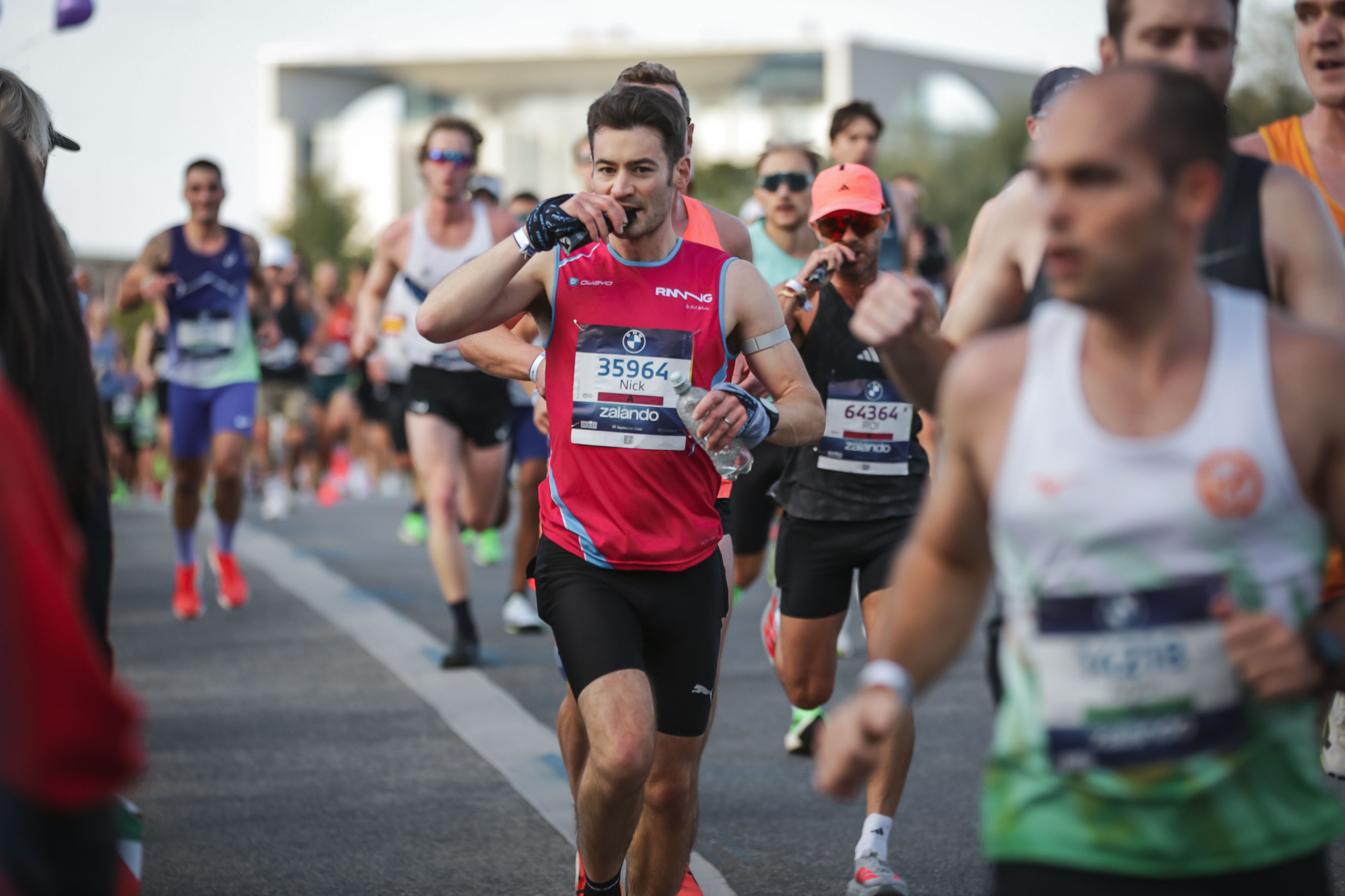
In Berlin I started with a 500ml water bottle in my hand and one in my waste belt. This was to make sure I had enough water to avoid relying on the water in cups provided. For me it’s almost impossible to drink enough from the cups and the water stations are chaotic and stressful.
Stopping to make sure you get the right cup, and trying to fuel using energy drink in cups is slow and a sticky mess. And good luck if you want to cool yourself and throw an energy drink over your head thinking it’s water…but that’s a different story…
Knowing I’ve got a litre of fluid on me relieves a lot of stress. Yes, there’s a weight penalty, you have to practice running with a bottle in your hand and the one bouncing in the belt is annoying to start with. But these are compromises I’m willing to make to avoid the inevitable consequences that dehydration will have on race performance. In London where the water is provided in bottles, I don’t carry my own.
I had two 40g gels in each pocket (an SIS Beta Fuel and a Maurten 160) of my shorts and a further two stashed in my belt.
Breakfast was a bagel, banana and black coffee two hours before, then a Maurten energy bar and a water bottle to sip on one hour before the race start took care of pre race fuelling and fluid.
Fuel strategy.
I’ve had bad experiences relying on the course fuel provided, such as sponsors not turning up and there suddenly being no gels on course (Yeovil 2015 😱) or grabbing a caffeine gel when I wanted a normal one and not being able to eat it. So I always bring everything I need and it’ll be brands and flavours I’ve tested extensively in training. My exact gel strategy for Berlin Marathon was as follows:
- 7km Beta Fuel Electrolyte
- 14km Maurten 160
- 21km Beta Fuel Nootropics Caffeine/stim
- 28km Beta Fuel Electrolyte
- 35km Maurten 160
I consumed 200g carbs in 2.5 hours, 80g per hour. I also had a spare gel on me just in case I dropped one or felt any cramping in the closing miles. I’ve used this tactic for several majors and it seems to work well. I could probably take on more, but for me the reason I’m not going faster is a fitness and training issue, not a fuelling one! I was only 70 seconds slower in the second half of Berlin compared to the first half and I did not experience any cramping. But if you’re hitting a wall, slowing significantly in the closing stages or experiencing a lot of cramps, then fuelling and hydration could be your limiting factor.
If you need help or advice around fuelling your next race or how to increase your carbohydrate intake during training and racing then hire an experienced coach! We’ve been there, done that, and made plenty of mistakes, so you don’t have to!
Keep Showing Up!
← All articles