
29 September 2026
How to Stay Consistent in Marathon Races
Nick gives tips around staying consistent year after year, allowing you to perform at major marathons when it really matters.
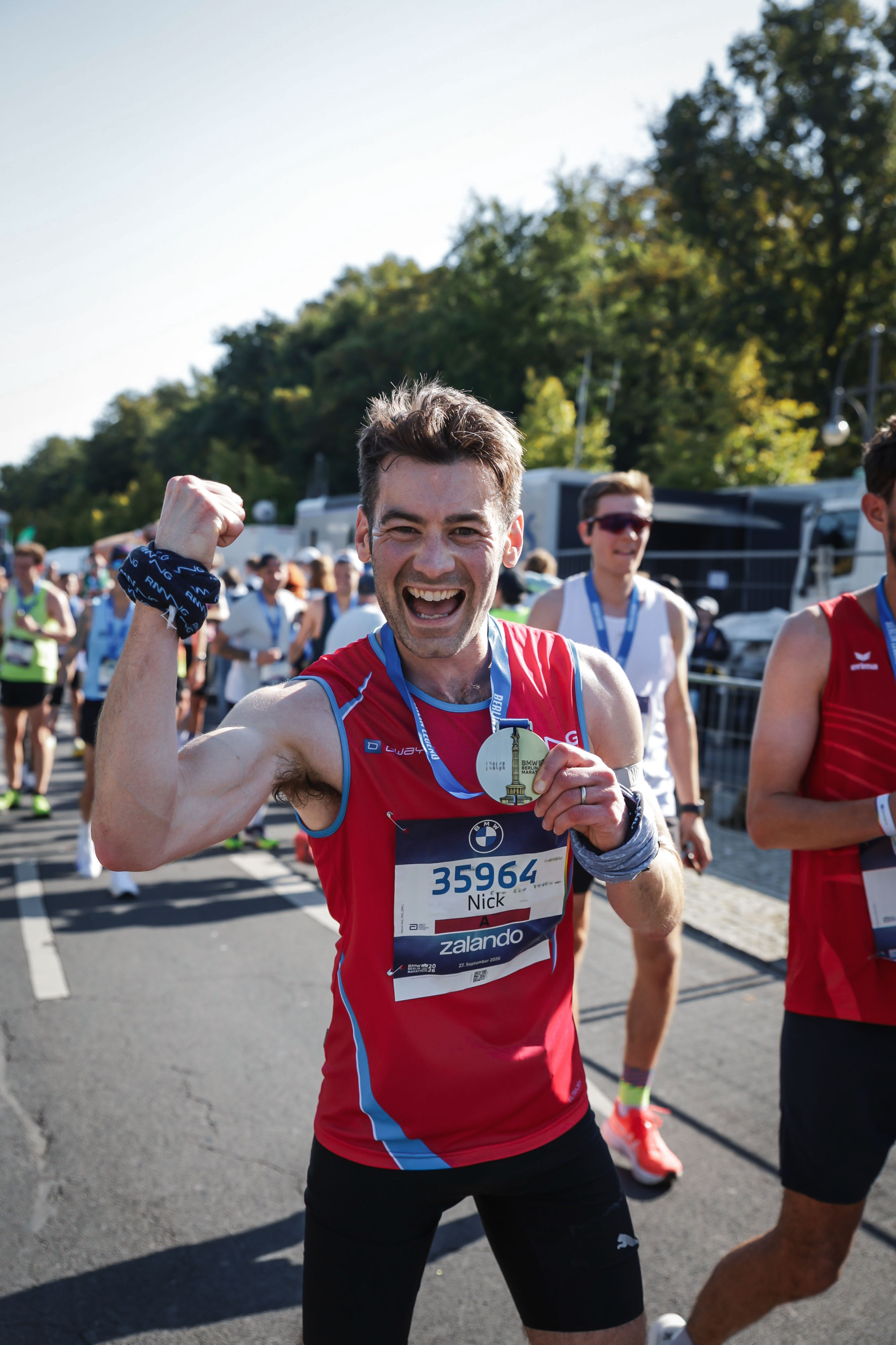
How to do you run a fast marathon? Year after year…
Sub 2:40 Abbott World Marathon Major Consistency
Let’s talk about maintaining performance! Berlin marathon 2026 was my sixth Abbott World Marathon Major. I ran 2:36:50. I have four London Marathon finishes (2021, 2022, 2023, 2025) and one New York City Marathon (2025).
I have run five of the six, in under 2:40, with only my first ever London bucking the trend at a still ‘not too shabby’ 2:43!
On the date of publishing(29/09/26) I’m on the eve of my 43rd Birthday. This marathon consistency is coming despite my age starting to work against me to a small degree. So how do you turn up on one or two days a year, year after year, and produce repeated quality results?
Love the process and plan your races

In the build up to a goal race people often ask whether or not I enjoy it. My standard answer to this questions is “I like it when it’s done!” It may surprise you but I’m not a big fan of racing due to the stress and pressure surrounding the event. I know that the feeling afterwards is impossible to recreate without first putting yourself through something challenging and on the limits of your capabilities. But that post race endorphin high is not enough of a motivator to get me out of the door, day after day, rain or shine. However, I absolutely love training. The process of getting fit for a marathon is incredibly satisfying, I thrive on the structure and daily routine. It’s helpful if you do too, but not 100% necessary I might add. So in order to motivate yourself to keep training, to build and execute a marathon block, you need to target certain races whilst having others as interim goals. If you want to have repeated success, you need to plan your A goal races 6-12 months in advance. Have that long term strategy in place whilst also focussing on getting the training done for the current B and C goal races. If you try to focus on performing maximally at each one, you’ll soon find yourself burning out. Treat it as part of a wider process and you’re more likely to be in proper shape for the bigger A goals.
Factor in recovery
It is no good starting a race plan for your next race immediately after you’ve just finished one. This is a problem I see repeatedly when people use online coaching apps. The Strava/Runna type systems don’t factor in what it is that you’ve just completed. If you ask for an 18 week marathon plan a week or two after completing a similar race, in all likelihood it will launch straight into structured sessions. Too much too soon. An experienced coach will give your body and mind time to recover from races as well as looking at your year as a whole and work out the best periodisation - when to recover, when to build, when to push etc.
Staying healthy and building good habits
This is a multi factorial topic. To me staying healthy means that your physiology shouldn’t really change hugely from one year to the next. Being habitual around the core pillars of your health outside of running will help greatly when you need to be in good shape to start a serious training block.
Focus your attention on your nutrition, sleep and stress management. I’m no saint, but I try to apply the principles of being good 80% of the time all the time. Then it only requires a minor adjustment to be good 90% of the time when things get really structured around races.
Nutrition
If you go on month long ‘binges’ where you neglect your nutrition then it’s all the harder to get back in the groove when you need to. In between races or on a week long holiday, allow yourself those treats you might otherwise avoid. But in your day to day life, try to be consistently healthy and you’ll have a buffer so your body isn’t affected by the occasional indulgence.
Sleep
Stick to a sleep routine. Even if you’re not training, maintain the habit of getting to bed at a reasonable time and set the alarm to wake up early if you’re normally a morning exerciser. Even if you’re not running, you can read, meditate, do some life admin etc. Keep the circadian rhythm stable and it’ll be easy to keep the stress and body weight stable too.
Stress
Life challenges can get on top of you and it’s easy to neglect your running - too busy, too tired, too stressed. Remember to look after your brain and mental wellbeing. Having a stable psychological base to work from means you will have the capacity to handle training loads year after year. Everyone finds their own way to do this, but whatever your flavour of mental health pill, keep taking it. Don’t stop just because your big goal has been and gone.
Injury prevention for marathoners
This is probably my weakest area! Even though I have a twice weekly, bespoke strength and conditioning routine prescribed by my physio on a monthly basis, I still suffer from a near annual breakdown. Typically this comes after a big race and giving my body a new stimulus to deal with too soon afterwards. This never used to happen, age, and me constantly pushing the boundaries of my physical capacity take their toll. Every year I learn something new about what my body can and cannot tolerate. However, when the issues do come, I’m very good at managing them. Seeking as much advice from qualified professionals about how to work with the situation. As most of you know, this whole Berlin Marathon block has been hampered by achilles tendinopathy. My participation at the race was in real jeopardy 3 months ago. But by doing my rehab and managing my training loads, I still managed to pull off a result to match my other performances. So if you’re having repeated issues, or have a current niggle or injury, don’t delay. Get a few opinions from physios, doctors or PTs, get a proper diagnosis and get to work with a rehabilitation and maintenance program. Don’t ask Dr Google or his young apprentice Dr ChatGPT. You need hands on, professional and specific advice. This has kept me in the game year after year, even when the odds were stacked against me.
Get your family on board.
Happy runners are generally faster than depressed ones! If you’re making too many sacrifices in terms of looking after your nearest and dearest in order to facilitate your running, it’s a sure fire way to alienate them. A balance needs to be struck if you’re to keep performing year on year. Runners can be selfish beasts, and I know that sometimes I’m annoying by being extra tired and falling asleep when we have guests or worried about the dinner choice the night before a hard training session. But in general, family comes first. Get the training done early in the day when everyone else is in bed or lunchtimes when they’re at work or school. Give them your full attention when possible and they’ll allow you the odd little indulgence of a race or training session. But don’t make your partner a ‘running widow’ or you’ll end up in hot water, and a rocky home life does not equate to fast marathons!
Make a commitment
It’s not rocket science, but repeated good performances require a baseline level of commitment for most of the year. That’s not to say you don’t ever take your foot off the gas, quite the opposite. I’m suggesting you’re deliberate with your training periodisation, you recover properly, whilst also concentrating on your other non running areas of health. Commit to being a well human, and the running can be the cherry on top of the cake.

If you need help or advice with training and how to avoid big peaks and troughs in your performance, an experienced running coach is invaluable.
And of course, one more thing…most importantly you have to keep showing up!
← All articles